
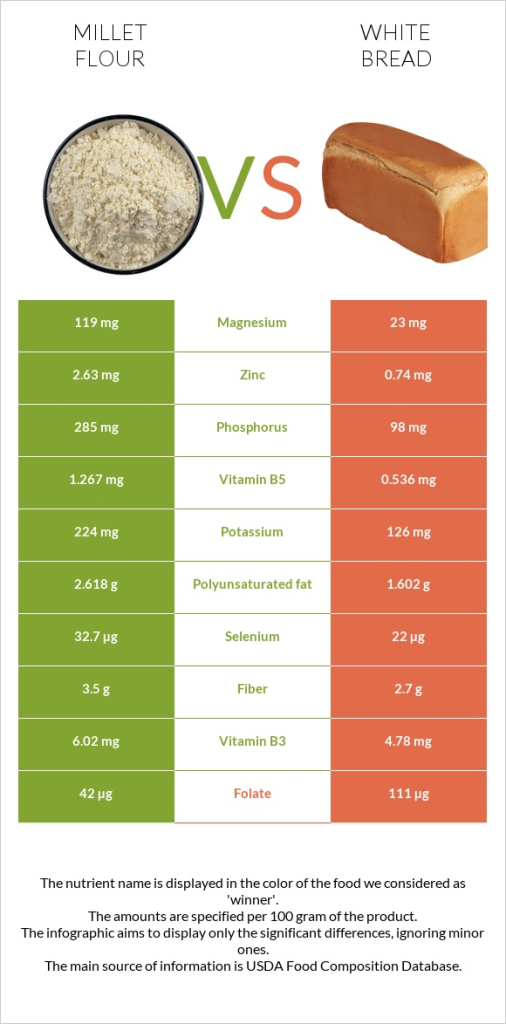
Epidemiological studies have shown that eating millets has many positive health effects, including a decreased risk of cardiovascular disease, protection from diabetes, enhanced digestion, decreased cancer risk, improved respiratory health, boosted energy levels and immunity, and protection from several degenerative diseases like metabolic syndrome and Parkinson’s disease (Manach et al., 2005). Among the various health benefits attributed to the nutrients found in millets are: resistant starch; oligosaccharides; lipids; antioxidants such phenolic acids; avenanthramides; flavonoids; lignans; and phytosterols. Miller (2001) and Edge et al. (2005 )
Cardiovascular Diseases
Millets, which are high-magnesium foods, can help lower blood pressure and lower the risk of heart attack or stroke, especially in people with atherosclerosis.
Additionally, the potassium in millets acts as a vasodilator, lowering blood pressure and decreasing cardiovascular risk. High density lipoprotein (HDL) cholesterol was seen in genetically obese type -2 diabetic mice on eating Proso millet under high fat settings (Park et al, 2008). This is because the plant lignans present in millets can transform into animal lignans in the presence of adiponectin. Serum triglyceride levels in rats fed either finger millets or proso millets were considerably lower compared to those in rats fed either white rice or sorghum. By lowering plasma triglycerides in hyperlipidemic rats, finger millet and proso millet may protect against cardiovascular disease (Lee et al., 2010).
The impact of feeding hamsters a lipid extract made from grain sorghum on their cholesterol absorption and plasma non-HDL cholesterol levels was investigated. In this experiment, hamsters were given diets that varied in the amount of grain sorghum lipid extract (GSL) compared to a control group. GSL also considerably decreased the levels of liver cholesterol ester in hamsters. The GSL diet reduces non-HDL cholesterol by preventing the body from absorbing cholesterol; the GSL extract contains plant sterols that greatly lessen the efficiency with which the body absorbs cholesterol, and policosano is that inhibits the body’s natural ability to produce cholesterol. Additional studies have shown that grain sorghum contains components that may help humans control their cholesterol levels when consumed as food or as a supplement (Carr et al., 2005).
Consuming whole grains on a daily basis has been shown to lower the risk of cardiovascular disease (CVD; Anderson & Hanna, 1999). Heidemann et al. (2008) conducted a long-term prospective study showing that those who eat a diet high in whole grains, vegetables, fruit, fish, and chicken have a lower risk of cardiovascular disease and overall mortality.
Researchers at Harvard University (Jensen et al., 2004) analysed the diets of 27,000 men aged 40 to 75 over a period of 14 years and found that consuming 40 grams of whole grains per day reduced the incidence of coronary heart disease by 20%.
Pearl millet’s lignin and phytonutrients are powerful antioxidants that help keep your heart healthy. That’s why eating pearl millet regularly can help keep your heart healthy.
Compared to rats given white rice or sorghum, those fed finger millets or proso millets had much lower serum triglyceride contents. By lowering plasma triglycerides in hyperlipidemic rats, finger millet and proso millet may protect against cardiovascular disease (Lee et al., 2010).
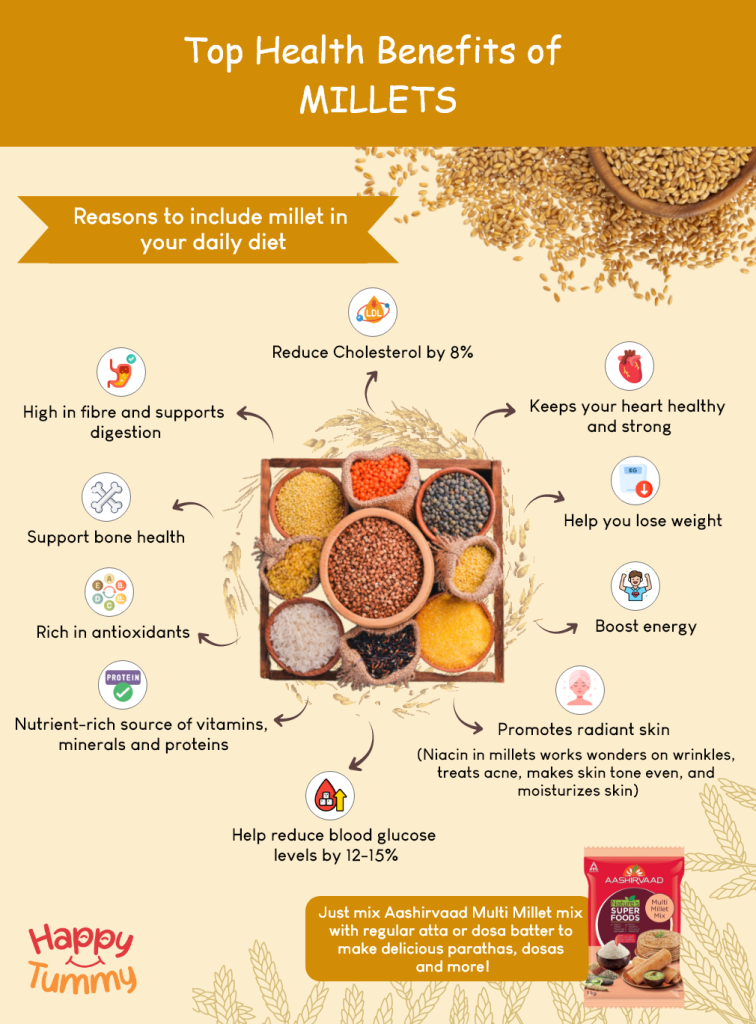
Barnyard millet improves gut microflora and protects against cancer and heart disease in rats. It also reduces blood glucose, serum cholesterol, and triglycerides compared to a diet containing rice or other minor millets (Kumari and Thayumanavan, 1997). Millets’ high fibre content is mostly responsible for their ability to reduce cholesterol by flushing the body of LDL and boosting the effectiveness of good HDL cholesterol.
Barnyard millet’s treated starch reduced blood glucose, serum cholesterol, and triglycerides in rats compared to rice and other minor millets (Kumari and Thayumanavan, 1997). Increased Proso Millet in the Blood Plasma: When fed Proso millet, genetically obese type -2 diabetic mice showed increased plasma levels of adiponectin and high density lipoprotein (HDL) cholesterol under high fat circumstances (Park et al, 2008).
Diabetes Mellitus
Diabetes mellitus is a chronic metabolic condition that causes hyperglycemia and changes in carbohydrate, protein, and lipid metabolism. It is the most prevalent endocrine condition and causes insulin deficiency (type 1) or insulin resistance and secretion (type 2) (Saleh et al., 2013). Millets’ high magnesium concentration helps prevent diabetes by improving insulin and glucose receptor effectiveness. Due to their high fibre content and alpha amylase inhibitory capabilities, finger millet diets lessen glycemic response (Kumari and Sumathi, 2002).
Sorghum: High quantities of slow digestible starch (SDS) delay carbohydrate digestion and absorption in the intestine. Dietary management and metabolic illnesses including diabetes and hyperlipidemia benefit from this SDS (Asp, 1994; Wursch, 1997). Indians can prevent and control T2D with sorghum’s high fibre and low glycemic index. Foods with fibre, magnesium, vitamin E, phenolic compounds, and tannins reduce the incidence of diabetes by slowing blood glucose and insulin spikes (Montonen et al., 2003).
The National Institute of Nutrition (ICMR) and the Indian Institute of Millets Research, Hyderabad, analysed sorghum-based foods’ Glycemic Index (GI) in 2010. Sorghum-based foods lower postprandial glycosilated haemoglobin and have low GI. In another study, nonobese patients with NIDDM who ingested sorghum bran papadi had lower blood glucose levels. 2004 (Shinde). In studies on processing and cooking white and yellow jowar varieties, coarse boiled yellow jowar flour had a lower glycemic index. Chapatti made from white Jowar flour has a lower glycemic index than yellow Jowar flour. Processing and cooking influence glycemic index, which affects diabetes diets (Vahini and Bhaskarachary, 2013).
Pearl millets reduce triglycerides and boost insulin sensitivity. Diabetes is well-controlled with pearl millet. Due to its high fibre content, it digests slowly and releases glucose into the blood more slowly than other foods. Diabetes patients’ blood sugar levels are maintained for a long time by this.
Finger millet: Due to its high fibre content and alpha amylase inhibitory capabilities, finger millet diets lessen glycemic response (Kumari and Sumathi, 2002).
Dermal wound healing has improved with finger millet. It also enhances antioxidant status and controls blood sugar in rats (Rajasekaran et al., 2004). A study indicated that finger millets’ polyphenols were key antidiabetic and antioxidant components due to the phenolic containing an OH group at the 4th position, which inhibits aldose reductase (AR). Gallic, protocatechuic, p-hydroxy benzoic, pcoumaric, vanillic, syringic, ferulic, trans-cinnamic acids, and quercetin successfully inhibited cataract eye lens. Thus, finer millets protein inhibits cataractogenesis in humans (Chethan et al., 2008).
Dermal wound healing has improved with finger millet. It also enhances antioxidant status and controls blood sugar in rats (Rajasekaran et al., 2004). Barnyard millet, especially dehulled forms, has a glycemic index of 50.0 (Ugare et al., 2011). In invitro trials with extruded amaranth, buckwheat, and millet combination food products, the fast and slowly digested carbs were dramatically reduced (Brennan et al., 2012).
A study indicated that finger millets’ polyphenols were key antidiabetic and antioxidant components due to the phenolic containing an OH group at the 4th position, which inhibits aldose reductase (AR). Gallic, protocatechuic, p-hydroxy benzoic, p-coumaric, vanillic, syringic, ferulic, trans-cinnamic acids, and quercetin successfully suppressed cataract eye lens. Thus, finer millets protein inhibits cataractogenesis in humans (Chethan et al., 2008). Few other millet seed coat phenolic compounds strongly inhibited α-glucosidase and pancreatic amylase. 2009 (Shobana et al.). The aqueous extracts of foxtail millets exhibit excellent anti-hyperglycemic action (Sireesha et al., 2011). Proso millet improved glycemic responses and insulin in genetically obese type 2 diabetic mice fed high fat (Park et al., 2008). Thus, millet grains may prevent and treat diabetes.
Barnyard millet: Type 2 diabetics may benefit from dehulled barnyard millet, which has a glycemic index of 50.0 (Ugare et al., 2011).
Foxtail Millet: The aqueous extracts of foxtail millets have excellent anti-hyperglycemic effect (Sireesha et al., 2011).
Proso millet: Genetically obese type 2 diabetes mice fed high-fat diets showed improved glycemic responses and insulin (Park et al., 2008).
Gastrointestinal Disorders
Improved nutrient absorption and decreased risk of more serious gastrointestinal diseases including gastric ulcers and colon cancer are two benefits of digestive regulation. Millets’ high fibre content makes them useful for treating digestive problems like constipation, gas, bloating, and cramps. In vulnerable individuals, eating gluten can set off an autoimmune response and cause celiac disease (Catassi and Fasano, 2008). The grain food group is particularly affected by the decision to follow a gluten-free diet.
Foods prepared with gluten-free grains such as rice, corn, sorghum, millet, amaranth, buck wheat, quinoa, and wild rice may be helpful for those on a gluten-free diet. According to (Thompson, 2009). Because they don’t contain gluten, millets have great potential as a food ingredient, as they’ll be safe for people with celiac disease to consume. To wit: (Taylor et al., 2006; Taylor and Emmambux, 2008;
Cancer
According to a review of the relevant literature (Thompson, 1993), millet grains are high in phenolic acids, tannins, and phytate.
According to research by Graf and Eaton (1990), these nutrients protect mice from developing colon and breast cancer. Consumption of sorghum, millet, and other cereals high in fibre and phenolic has been linked to a lower risk of esophageal cancer compared to that of wheat and maize (Van Rensburg, 1981). Fibre is one of the greatest and easiest strategies to prevent breast cancer in women, according to recent studies. By increasing their daily fibre intake to more than 30 grammes, their risk of developing breast cancer is cut by more than half.
Sorghum has been shown to have anti-carcinogenic effects. Sorghum has been demonstrated to have anti-cancer effects in both in vivo and in vitro experiments. Sorghum contains polyphenols and tannins with favourable melanogenic activity (Gomez-Cordovez et al., 2001) and anti-mutagenic and anti-carcinogenic characteristics (Grimmer et al., 1992). Procyanidin extracts have been shown by Parbhoo et al. (1995) to stimulate cytochrome P-450, a protein that can convert some promutagens to mutagenic compounds, in rat livers.
Incidence of oesophageal cancer was shown to be low among those who regularly consumed sorghum, according to epidemiological data from Sachxi Province, China and other regions of the world (Van Rensburg, 1981). The authors analysed data from 21 villages throughout each country over a 6-year period and discovered that sorghum eaters had much lower rates of esophageal cancer than those who consumed wheat or maize.
Detoxification (Anti-Oxidant Properties)
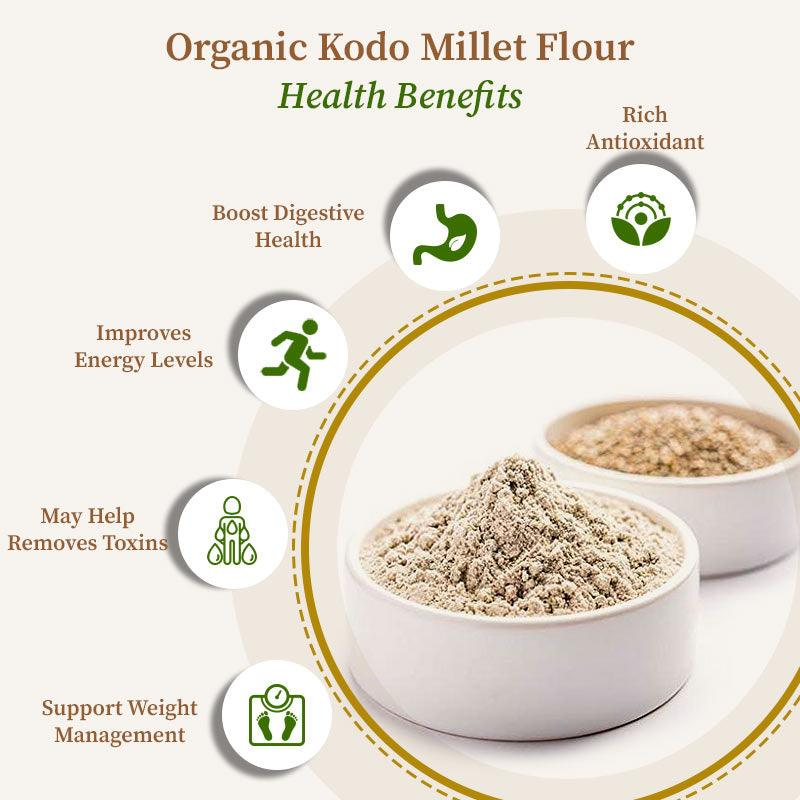
Millet’s high antioxidant content makes it a useful tool for fighting cancer and clearing the body of harmful substances like those found in the kidneys and liver. Catechins like quercetin, cucurmin, ellagic acid, and others aid in the removal of toxins and foreign substances by stimulating excretion and blocking the effects of enzymes that break them down. Since polyphenols play such an important role in human health, they have garnered a great deal of attention. (Tsao R., 2010)
Soluble and insoluble bound phenolic extracts of multiple millet species (kodo, finger, foxtail, proso, pearl, and small millets) demonstrate antioxidant, metal chelating, and reducing properties (Chandrasekara and Shahidi, 2010). There are 47mg polyphenolics and 3.34mg tocopherol per 100g in foxtail millet, but only 29mg polyphenolics and 2.22mg tocopherol per 100g in proso millet. Polyphenolic content was also found to positively correlate with radical cation scavenging capacity (R2 =0.9973, P0.01) (Choi et al., 2007).
Using high-performance liquid chromatography (HPLC) and HPLC-tandem mass spectrometry (MS), researchers were able to positively or tentatively identify more than 50 phenolic compounds from a variety of classes in 4 phenolics fractions of several whole millet grains (kodo, finger, foxtail, proso, little, and pearl millets) (Chandrasekara and Shahidi, 2011a). For this reason, millet grains can be included into functional food applications and used as a natural antioxidant source.
Electron spin resonance was used to test the antioxidant capacity of sorghum bicolor, kodo millet, finger millet, tiny millet, foxtail millet, barnyard millet, and white cultivars of sorghum bicolor grown in India (Hegde and Chandra, 2005). In addition, research has shown that finger millet extracts have a stronger radical-scavenging activity than wheat, rice, and other millet species (Dykes and Rooney, 2006). Antioxidant activity was also seen in foxtail millet protein hydrolysates that had been defatted (Mohamed et al., 2012). As a result, millets have potential as a nutraceutical and functional food ingredient for health promotion and illness risk reduction, as well as a natural source of antioxidants in food applications.