
CONTENTS
General Requirements
Sorghum Farming
Pearl millet Farming
Finger millet Farming
Foxtail millet Farming
Kodo millet Farming
Proso millet Farming
Millet Diseases
Millet Harvesting
Why in news?
The United Nations General Assembly recently adopted a resolution declaring 2023 the International Year of Millets, as proposed by India to the Food and Agriculture Organization (FAO).
What are millets?
India is the largest global producerof millets, with a 41% market share. A compound annual growth rate of 4.5% is projected for the global millet market in the coming decade.
- Millets – Sorghum, pearl millet, finger millet and several small millets (kodo, little, foxtail, proso and barnyard).
- All millets, maize, and barley together are called coarse cereals.
- Millets were one of the oldest foods known to humans. But they were discarded in favour of wheat and rice with urbanization and industrialization.
How significant are millets?
- Provide food, nutrition, fodder and livelihood security.
- Help mitigate the effects of climate change with low carbon footprint of 3,218-Kg equivalent of CO2 per hectare. [Wheat – 3,968 kg; Rice – 3,401kg]
What are the favourable factors?
- Drought resistant
- Suitable for harsh, hot and dry environments.
- Can grow in arid regions, requiring only 350-400 mm of annual rainfall.
- Some varieties of pearl millet survive at temperatures up to 46°C.
- Require minimal inputs for growth.
- Being hardy crops, they can withstand extreme temperatures, floods and droughts.
What are the concerns with millets faming?
- Market and economic barriers.
- Low demand, especially in urban markets.
- Unjust pricing and value wringing by intermediaries.
- Low remuneration leading to farmer distress.
- Lack of input subsidies and price incentives.
- Subsidised supply of fine cereals through the PDS and change in consumer preferences leading led to a shift from the production of millets (jowar in particular) to soybean, maize, cotton, sugarcane and sunflower.
What are the government’s initiatives so far?
- Millet Mission in 2018 as part of the National Food Security Mission – Promotion of technological interventions, improvement in seed quality and MSP for bajra and jowar.
- Millet Network of India and the M.S. Swaminathan Research Foundation – Collective formation efforts to boost the domestic growth of millets.
- Setting up farmer organizations to help small and marginal farmers overcome hindrances in millet production and marketing.
- Odisha Millet Mission:
- 7.2 million women emerged as ‘agri-preneurs’
- about 70,000 farmers in the state took up millet farming
What are the other measures needed?
Market dynamics
- Incentivizing the adoption of inter-cropping involving millets.
- Providing crop insurance and support for storage facilities.
- Broadening the millet marketing policies.
- Generation of demand for millets-based products.
- 2018 ‘#LetsMilletCampaign’ in Bengaluru promoted the use of millets in dishes such as risotto and pizza by restaurateurs.
- Food delivery startups such as FreshMenu rolled out millet-intensive menus
Cultural connection
- Harnessing the knowledge of the value of little millets among traditional communities.
- Re-introduction of cultural associations and festivals thathelp promote the growth of millets. E.g.,
- North-East Network in Nagaland organized in 2020
- Mandukiya in Vishakhapatnam celebrated annually in June/July
- Women’s collectives in Telanganapromoting millets through a culture-centric approach
Ecosystems and sustainability
- The value of millets is evident in their relevance to the sustainable development goals of food security, nutrition and poverty eradication.
- In line with goals of the UN Decade of Ecosystem Restoration (2021-30), local practices can support rural economies.
- Drought-tolerant cropslike millets with low dependence on chemical inputs.
- Inter-cropping of millets with other crops. [Fibrous roots of millet plants help in improving soil quality, keep water run-off in check and aid soil conservation.]
Biofuel and climate resilience
In India, 2025 is set as the deadline for achieving 20% ethanol blending with petrol. Most bio-ethanol in India is produced using sugar molasses and maize.
- Creating bio-ethanol using sorghum (jowar) and pearl millet (bajra), thus bringing down carbon emissions by about half.
- Millets can deliver greater returns than maize, while using 40% less energy in processing, and are cost advantageous as a feedstock for bio-ethanol production.
- All the above priorities need to bebacked by government policies that promote millets production, incentivize farmers and strengthen market linkages.
Source: Livemint
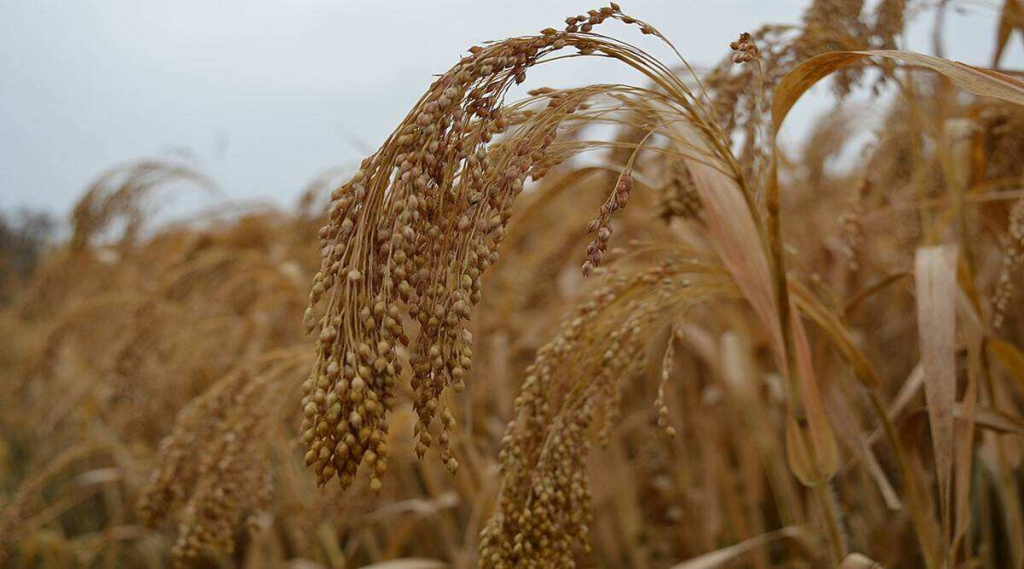
Climate Requirements
When the seeds in the upper half of the panicle have matured, the millets are ready to be harvested. It’s possible that some of the seeds in the lower part of the panicle are still in the dough stage, but they must no longer be green. It’s possible that the leaves and stems are still green at this stage. In order to dry the straw before colabining, millet is typically swathed during harvest. Cutting down on yield, test weight, and colour quality by swathing too soon. Loss from shattering and lodging rises if harvesting is delayed. Proso millet is susceptible to damage from rodents and birds when it is maturing. Oftentimes, control software is a need.
Hay and silage made from foxtail millet should be cut between the late boot and bloom stages. Protein content in hay may often run between 12 and 14% at this time of year. Protein declines as a plant ages. Cattle that eat bunks may develop lump jaw and painful eyes if the harvest is delayed. Foxtail millet, if being harvested for seed, should not be cut until it is fully ripe, then swathed and threshed. After a killing frost, it is sometimes blended directly, however this often results in lost seeds.
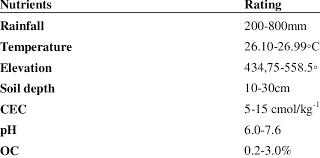
Soil requirements
Loamy soils that drain properly are ideal for growing millets. They can’t handle soggy ground or prolonged drought. Coarse, sandy soils are not ideal for proso millet’s growth..
Seed preparation and germination
Protecting seedlings from head smut (Sphacelothaca destruens) with a fungicide could improve their chances of survival.
Cultural Practices:
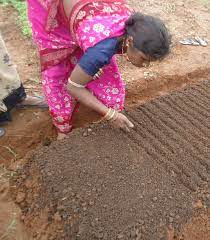
Seedbed Preparation:
Millet requires similar treatment of the seedbed as spring-sown small grains. The seedbed needs to be firm and well-worked, and weeds need to be eradicated first.
Due to the late planting time of millets, weed management by spring ploughing and farming is an option.
Method and Date of Seeding:
Proso millet should be planted at a rate of 20 lb. per acre. The planting rate for Foxtail 2 millet should be 15 Ib/acre. Seeding depth for millets when using a grain drill is typically one inch.
A tiny seed can grow extremely long first internodes and even go underground if a protective crust doesn’t form beforehand. Seedbed firmness and stand establishment are both improved by the drill’s press wheels. Because of their weakness against weeds, millets require large seeding rates to achieve a dense stand.
Fertility and Lime Requirements:
In most cases, nitrogen is the limiting nutrient when growing millet. Nitrogen applications must take into account both desired yields and past cropping patterns. The quality of lodging might be negatively impacted by an abundance of nitrogen. Manure and other forms of waste nitrogen can be used if allowed.
It’s important to add phosphorus and potassium to the soil when it’s recommended.
Fertiliser applications made by drill row (with the exception of pure phosphorus fertilisers) are not advised since they may harm the seedlings. Millet thrives at a pH of 5.6 or higher.
Introduction of Millets Farming:
Sorghum:
In India, sorghum is more commonly referred to as Jowar. Sorghum was a common grain used in the preparation of Rotis, a type of flatbread. Jowar possesses a component called policosanols, which can aid in lowering cholesterol levels in addition to its other health benefits (iron, protein, and fibre). Sorghum is a cereal grain plant from the grass family that is commonly known by a variety of other names, including great millet, Indian millet, milo, and durra.
Another ancient cereal grain that is typically farmed for its fodder usefulness is sorghum. High quantities of unsaturated fats, protein, fibre, and minerals including phosphorus, potassium, and iron give sorghum, also known as Jowar, a high nutritional value. Sorghum is a metabolic tonic. Sorghum is a hardy grass that averages 0.6 m in height but can get as tall as 2.4 m..
Farming
In order to produce optimal grain yields, sorghum needs an annual average temperature of at least 25 degrees Celsius. When daylight temperatures are at least 30 degrees Celsius, photosynthesis is at its peak. The minimum soil temperature for planting sorghum or jowar is 17 degrees Celsius. When plants aren’t planted in time for the long growing season (about 90 to 120 days), yields are drastically reduced.
Depending on the soil’s density, grain sorghum is typically planted between 2 and 5 centimetres deep using an industrial corn seeder. Produce increases of 10–15 percent by more efficient use of water and light by growing in 25-centimeter rows as opposed to the more common 1-meter rows. Sorghum is a competitive crop that thrives in close rows despite the presence of weeds. Herbicides are still used to reduce the weed population so that plants can produce a harvest that can be sold for a profit.
Sorghum fields rarely suffer from pests and illnesses. However, the primary cause of crop failure is birds. Corn earworms, aphids, and larvae of some Lepidoptera species, such as turnip moths, could damage the crop. Sorghum is a crop that thrives on a lot of nitrogen. To produce 6.3 metric tonnes of grain per acre, 110 kilogrammes of nitrogen is needed, but only minimal levels of phosphate and potassium are required. Sorghum grows similarly to maize, but it has a more broad, branched root structure and more side shoots. The root technique is extremely fibrous and can go as deep as 1.2 metres. Sorghum cultivars with genes for dwarfism have been selected in recent years, resulting in sorghum that matures at a height of 60 to 120 centimetres. This is in contrast to the typical height of wild sorghum species, which is 1.5 to 2 metres.
Since 75 percent of a plant’s water is found in the top metre of soil, and since this can have a significant impact on plant yield in arid regions, it’s important to pay close attention to the water-holding capacity of your soil. In the first ten days of growth, the plants need as much as 70 to 100 millimetres of water. As sorghum develops, its roots expand deeper into the soil, where it can access previously unreachable aquifers, reducing its watering needs. By the time the seed heads are fully developed, the ideal rainfall has dropped to about 50 mm every ten days. The plant’s root system may be stunted if the topsoil is compacted, reducing the plant’s resilience to drought. As a result of their adaptation to hot and dry climates, these plants require less compacted soil and more topsoil than is often found in uncultivated places.
Pearl Millet or Sajjalu:
The most common millet crop is pearl millet, and India is the world’s largest pearl millet grower. The second most important millet in India is pearl millet. Phosphorus, an essential component of cell structure, may be found in abundance in pearl millet. Besides “Bulrush millet,” you might know it as “Babala,” “Bajra,” “Dukhn,” “Gero,” “Sajjalu,” or “Souna.” Planting season is from May to September, while harvest is from September to February. These annuals can reach a height of 1.8 to 4.5 inches.
Farming:
Because hybrids, new pearl millet seeds must be obtained every year. Producers should be sure that the seed they are buying is not a forage type pearl millet, as there are various different types of pearl millet available. Forage varieties average 7–8 feet in height and produce fewer seeds.
Pearl millet is best grown when the soil temperature is at least 65 degrees Fahrenheit and preferably higher. The best time to plant is in the beginning of June, although anytime from the middle of May to the middle of June is fine. The suggested sowing rate is four pounds per acre. For pearl millet, the precise seeding rate is not crucial because the plant can partially compensate for a weak stand by increasing the number of tillers. Half an inch to an inch is the ideal depth for sowing seeds. The lesser seeding depth compared to maize or soybeans makes appropriate management of planter depth more problematic, yet no-till seeding is still possible.
Grain-type pearl millet can have its rows of any width. Row crop farming for weed control is possible with pearl millet because of previous work based on 30-inch row widths in the Midwest. This row spacing allows pearl millet to develop enough leaves to “close the row.” Yields have been optimised at 15-inch spacings and at narrower spacings, such as 7.-8 inches, in other states, suggesting that smaller row spacings are preferable than wide ones. While a cultivator can’t be used because to the small rows, ground shading from millet leaves happens sooner, which helps suppress some weeds. Wider row spacings may be preferable on sandy or low fertility soils because they reduce competition between plants and allow them to send out more lateral roots.
Pearl millet thrives in increasingly arid and hot environments with low soil fertility. The soil conditions of high salinity or low pH are ideal for growing pearl millet. Its resistance to stress means it can be cultivated in locations where other cereal crops, like wheat, would perish. Pearl millet can be grown as a summer annual and works well in both single-crop and multiple-crop rotations. Over 265,000 square kilometres of land are being used for cultivating pearl millet. About half of the world’s millets come from this region.
Finger Millet:
It’s a staple food in Southern India and goes by many names there, including ragi, red millet, and African finger millet. It has a lot of protein and calcium, and it also has a decent amount of iron and other minerals. Ragi (finger millet) has a high concentration of the essential amino acids (EAA) that the human body requires, making it the most antioxidant-rich of the most frequent Indian foods. Ragi is a nutritious alternative to white rice and wheat flour. Nutritionally, finger millet can’t be beat. This gluten-free millet is excellent for young children’s mental growth because it is packed with protein and amino acids. Ragi is the most calcium-rich millet, making it ideal for dieters. And because of their high fibre content, they’re a great choice for anyone trying to watch their weight.
Growing finger millet is possible in both the warm (May–September) and cold (November–December) months, depending on the variety. To improve the soil’s organic matter content, moisture retention capacity, and structural integrity, an application of farmyard manures at a rate of 8–10 tons/ha is suggested. Rock phosphate is the only acceptable kind of phosphorus fertiliser. Approximately two weeks after emergence, and again after another two weeks, weeding is required. Land training should begin as soon as possible. For optimal germination, plant population density, and weed control, a fine seedbed that is suited for small grains is necessary. The only type of soil it can’t be grown in is very gritty sand.
In India, finger millet is a monoculture grown with the use of irrigation and transplantation. Intercropping with cereals, castor bean, Niger, peanuts, and pulses makes the greatest use of the rain-fed soil. Beans, pigeon peas (Cajanus cajan), cowpeas (Vigna sinensis), and niger are some of the most prevalent auxiliary crops cultivated alongside ragi. Finger millet is a secondary crop grown with groundnuts. Sheep and cattle dung are used liberally. Irrigated and unirrigated crops have both benefited from the usage of green manures such cowpeas, sun hemp, artificial manures, and oil cakes. Finger millet requires chopping and weeding every 14 days or so. Irrigation cycles and frequency shift with the seasons.
Foxtail Millet:
The Iron content of foxtail millets is exceptionally high, and these millets are also completely pest-free. Foxtail millet can be used to protect sensitive pulses like green gramme from pests during storage. They lower insulin and cholesterol levels while raising HDL levels.
Foxtail millet, which is widely accessible as semolina and rice flour, contains carbs that help maintain a balanced blood sugar level. This millet’s high iron and calcium content makes it a good choice for boosting the immune system.
Farming:
Foxtail millet is still cultivated in dry and semiarid areas of India. Since the Sangam era, foxtail millet has been an important part of the cuisine of the people of South India. Foxtail millet is the most widely grown type of millet in China and is an important staple crop, particularly in the arid northern section of the nation. Foxtail millet is typically grown in the arid uplands of Southeast Asia. It is grown on a smaller scale for birdseed in Europe and North America, but on a larger scale for hay and silage. Before wet rice and sweet potato production took over, foxtail millet was the dominant staple crop in the northern Philippines.
Foxtail millet, which is widely accessible as semolina and rice flour, contains carbs that help maintain a balanced blood sugar level. This millet’s high iron and calcium content makes it a good choice for boosting the immune system.
Kodo Millet:
Polyphenols, an antioxidant molecule, are abundant in Kodo millets, which also have high fibre and low fat content. Collagen glycation and cross-linking were both reduced by kodo millet. Diabetics can benefit greatly from eating Kodo millets. Kodo millet has a high lecithin content and is great for boosting nervous system health; it’s also very simple to digest. The minerals calcium, iron, potassium, magnesium, and zinc, plus the B vitamins niacin, B6, and folic acid can all be found in abundance in kodo millets. Kod millet is extremely helpful in lowering blood pressure and cholesterol when consumed on a regular basis.
Farming:
Kodo millets can tolerate temperatures from the tropics through the subtropics, and even temperatures as low as 2,100 metres. It thrives in warm conditions. It requires 500-900 millimetres per year of rain to flourish. Despite its high water needs, Kodo Millet thrives in 50–60 cm of annual rainfall.
Planting rows, rather than scattering the seeds, is the best method for growing kodo millet from seed. The clay-rich soil it prefers is ideal for plant growth. Kodo millet thrives in sub-humid arid climates and needs about 800 to 1200 mm of water per year to grow. It thrives on low-nutrient soils because it faces little competition from other plants and weeds. However, standard fertiliser helps it thrive in any soil. Kodo millet grain yields in India’s Rewa area increased by 72% in 1997 with the required amount of 40 kg of nitrogen and 20 kg of phosphorus per acre, compared to no fertiliser. Although it may grow in partial shade, kodo millet does better in full light. It thrives at temperatures between 25 and 27 degrees Celsius. It takes four months from planting to harvest.
Proso millet
Common millet, hog millet, broom corn, yellow hog, Hershey millet and white millet are also other names for proso millet. Seeds can be harvested from proso millet plants anywhere between 60 and 100 days after sowing, making it a warm-season grass. Due to its minimal moisture requirements and short growth season, it can succeed where other grain crops would not.
Farming
Due to its low maintenance requirements and lack of documented disease, proso millet is widely utilised in organic farming across Europe. It is a common intercrop in the United States. So, by planting proso millet, you may keep your fields productive all year round without ever having to take a break for the summer. Because the previous crop’s stubbles admit more heat into the soil, millet can be grown more quickly and at an earlier time. Because millet has such shallow roots, the earth can recover its moisture only in time for the next crop. The millet stubble works as a windbreak for later crops like winter wheat as snow falls.
Proso millet, like maize, is a thermophil due to its photosynthetic organism. Therefore, areas of the field that receive a lot of shade should be avoided. Extreme cold, below 10 to 13 degrees Celsius, causes severe discomfort. The excellent drought resistance of proso millet makes it a desirable crop in areas with limited water resources and extended dry spells. The soil should be either light or medium in weight. Soil compaction should be avoided because of the plant’s flat root techniques. on addition, proso millet cannot grow on waterlogged soil due to dammed-up water.
Sugar beets and rapeseed both require a finely pulverised seedbed. Proso millet is planted throughout Europe between the middle of April and the end of May. If a harrow weeder is employed, this number needs to be higher in organic farming. The same sowing equipment used for wheat and other crops can be utilised for sowing. If a farmer uses an intro cultivator, he or she should provide 16 to 25 centimetres of space between the rows. Sowing should be done at a depth of 1.5–2 cm in ideal soil and 3–4 cm in dry soil. After planting, it helps the soil retain moisture by rolling on it. In the United States, farmers can and do use no-till farming methods. Two weeks after that, you can start planting seeds.
Millets diseases and their control:
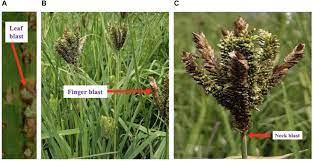
Seed treatment can reduce the impact of the pest Head Smut (Sphacelotheca destruens) on proso millet.
Both proso millet and foxtail millet may harbour the kernel smut fungus, Ustilago crameri. Due to the persistence of the inoculum in the soil, this disease can only be effectively managed by the use of seed treatment and crop rotation.
Sorghum is particularly susceptible to grain mould, but other millets like pearl millet and finger millet can also have it. Pigmentation of the lemma, palea, or glume, or fungal development on the anthers and filaments, are the first signs to occur on sorghum.
Insects and Mites and their control:
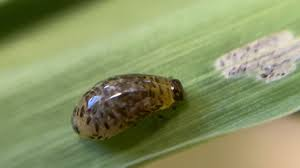
The wheat curl mite lives in foxtail millet and has been linked to the spread of wheat streak mosaic virus in winter wheat. The foxtail crop must be killed and prevented from acting as a host by cutting it for hay by early August and then undercutting the stubble.
The grasshopper is the most damaging insect to millets. Millets may now be treated with insecticides for the control of grasshoppers. Armyworms are a common type of insect that can be managed with insecticides, despite their prevalence.
Harvesting methods of Millets:
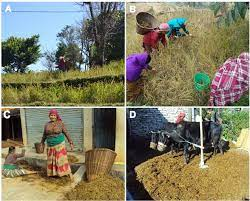
When the seeds in the upper half of the panicle have matured, the millets are ready to be harvested. It’s possible that some of the seeds in the lower part of the panicle are still in the dough stage, but they must no longer be green. It’s possible that the leaves and stems are still green at this stage. In order to dry the straw before colabining, millet is typically swathed during harvest. Cutting down on yield, test weight, and colour quality by swathing too soon. Loss from shattering and lodging rises if harvesting is delayed. Proso millet is susceptible to damage from rodents and birds when it is maturing. Oftentimes, control software is a need.
Hay and silage made from foxtail millet should be cut between the late boot and bloom stages. Protein content in hay may often run between 12 and 14% at this time of year. Protein declines as a plant ages. Cattle that eat bunks may develop lump jaw and painful eyes if the harvest is delayed. Foxtail millet, if being harvested for seed, should not be cut until it is fully ripe, then swathed and threshed. After a killing frost, it is sometimes blended directly, however this often results in lost seeds.